

Children are not “misbehaving” without purpose. From an Adlerian lens, every behavior is a child’s best attempt to belong and feel significant. When children lack the skills to meet these needs in helpful ways, they may turn to anxiety, defiance, attention-seeking, or withdrawal.
This is where Adlerian Play Therapy becomes powerful.
Adlerian Play Therapy translates the principles of Individual Psychology into the language children understand best: play. At the heart of this approach are the Crucial C’s—four core experiences every child must feel in order to thrive:
Connect
Capable
Count
Courage
When these needs are consistently met, children develop emotional regulation, social competence, and internal confidence. When they are missing, children often communicate distress through behavior.
Let’s explore how the Crucial C’s directly impact child development and how Adlerian Play Therapy restores these essential experiences.
1. Connect: “I belong here.
Connection is the foundation of all healthy development. Children must first feel safe, seen, and accepted before they can learn, grow, or change.
In Adlerian Play Therapy, the therapist prioritizes building a genuine, respectful relationship where the child feels understood without judgment. Through tracking, encouragement, and shared play, the therapist communicates: “You matter. I enjoy being with you. You belong here.”

Developmental impact of Connection
When children feel connected, they:
Show decreased anxiety and oppositional behavior
Develop secure attachment patterns
Increase trust in adults
Become more open to learning new skills
Children who lack connection often seek it through negative attention, power struggles, or social withdrawal.
2. Capable: “I can do hard things.”
A child’s sense of capability is built through experience, not praise. Adlerian therapists intentionally create opportunities for children to problem-solve, make choices, and experience mastery during play.
Rather than rescuing or directing, the therapist encourages effort: “You kept trying even when that was tricky.”
Developmental impact of Capability
When children feel capable, they:
Develop frustration tolerance
Improve executive functioning
Reduce helplessness and shutdown responses
Build intrinsic motivation
Without this, children may give up easily, avoid challenges, or act out to cover feelings of inadequacy.
3. Count: “I make a difference.”
Children need to feel that they are not just present—but important. In sessions, therapists invite children into roles where they contribute, lead, and help. The message becomes: “What you do has value. You matter to others.”

Developmental impact of Counting
When children feel they count, they:
Show increased empathy
Improve cooperation at home and school
Reduce attention-seeking behaviors
Develop prosocial skills
Children who don’t feel they count may seek significance through misbehavior, control, or rivalry.
4. Courage: “I can try, even if I might fail.”
Courage is the outcome of experiencing the first three C’s. When children feel connected, capable, and that they count, they develop the bravery to take risks, express feelings, and face fears. Therapists normalize mistakes and model resilience: “It’s okay to feel nervous. You’re trying anyway.”

Developmental impact of Courage
Children with courage:
Attempt new social interactions
Express emotions appropriately
Recover from setbacks
Show reduced perfectionism and anxiety
Without courage, children may become rigid, anxious, or avoidant.
Why the Crucial C’s Matter for Long-Term Child Development
Research and clinical experience consistently show that behavioral issues are often misinterpreted skill deficits. Adlerian Play Therapy reframes behavior as communication of unmet needs in the Crucial C’s.
For example:
Behavior Missing Crucial C
Defiance and power struggles - Connect/Count
Giving up quickly - Capable
Attention-seeking - Count
Anxiety and perfectionism - Courage
Social withdrawal - Connect
What This Looks Like in a Playroom
In an Adlerian playroom, you might see:
A child directing the therapist in pretend play (Count)
A child persisting through a challenging game (Capable)
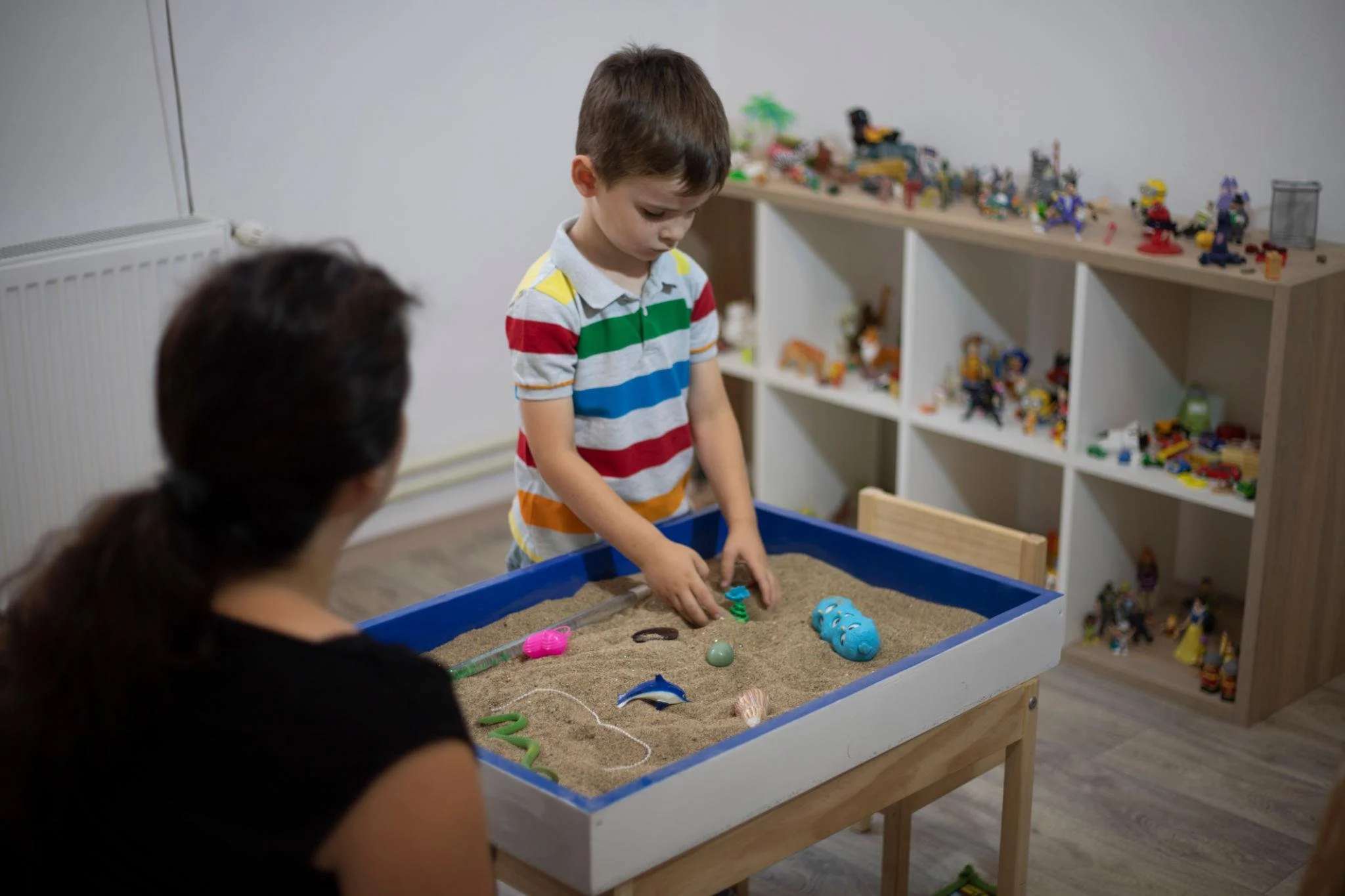
A therapist reflecting feelings during sand tray play (Connect)
A child practicing brave statements before a feared task (Courage)
These moments may look simple, but they are developmentally transformative.
How Parents Benefit from Understanding the Crucial C’s
When parents begin responding to behavior through the lens of the Crucial C’s, discipline shifts from correction to encouragement. Instead of asking, “How do I stop this behavior?” parents begin asking, “Which Crucial C is my child missing right now?”
This mindset reduces power struggles and builds cooperation rooted in belonging rather than fear.
Final Thoughts
Children thrive when they feel they belong, are capable, matter, and are brave enough to try. Adlerian Play Therapy uniquely targets these needs through developmentally appropriate, relationship-based interventions.
The Crucial C’s are not just therapeutic concepts—they are the building blocks of healthy child development, emotional resilience, and lifelong confidence.
When we nurture Connect, Capable, Count, and Courage, we aren’t just addressing behavior. We are shaping how a child sees themselves in the world.
Other Services We Offer in Katy & Surrounding Areas
At AP Counseling Group, we offer a variety of services to support individuals and families. Our child counseling and play therapy provides a safe space for kids to process emotions and build healthy coping skills. We also offer teen counseling to help adolescents navigate challenges and strengthen their relationships, and adult counseling tailored to help adults manage life pressures. Whatever stage you're in, we’re here to support you with guidance rooted in faith and practical tools.